Welcome

News
Contact Us
23
JANUARY
How To Make The Wall Of The Pocket Door
A pocket door is a door that can be hidden in the wall, it does not take up additional space, and is suitable for installation in areas with more compact space, such as bathrooms, cloakrooms, etc. The following introduces you to the common pocket door wall practices:
Materials and tools:
The materials to be prepared include keels (light steel keels or wooden keels), drywall, expansion screws, self-tapping screws, sound insulation foam (optional), and woodboard (reinforcement required). Tools include electric drill, screwdriver, tape measure, level, cutting machine, hammer, etc.
Determine the position and size of the door:
Use a tape measure to accurately measure the position and size of the door, and determine the opening direction of the pocket door and the thickness of the wall. In general, the thickness of the pocket door wall is thicker than the ordinary door wall, usually around 12-15 cm, to accommodate the door sliding inside the wall. According to the size of the door, determine the installation position of the track and mark it on the wall.
Build the Keel Frame
Light steel keel:
In accordance with the marked position, install the top keel and the floor keel first, and use expansion screws to fix them to the ceiling and floor. Make sure the keel is level and firm. Then install the vertical keel, according to the width of the door and the specifications of the keel, determine the spacing of the vertical keel, generally 40-60 cm. Insert the vertical keel between the top keel and the ground keel and secure it with self-tapping screws.
Wooden keel:
If you choose wooden keel, also install the top and bottom of the wooden square first, with expansion screws or wooden wedges and nails fixed. Then install the vertical wooden keel, pay attention to the wooden keel to fire and anti-corrosion treatment. The connections between the keels can be made using nails or wood screws.
Install track:
After the keel frame is built, install the track of the pocket door in the predetermined position. Screw the track to the keel according to the type of track and the instructions. Make sure the rails are installed level, otherwise the door may get stuck when sliding.
Install sound insulation cotton (optional) :
If there are high requirements for sound insulation, you can fill the keel frame with sound insulation cotton. Cut the sound insulation cotton to the appropriate size and fill it between the keels, taking care to fill evenly without leaving gaps.
Install one side drywall:
After the rails are installed, install the drywall on the side of the pocket door first. Cut the drywall to size, cover the keel frame, and secure the drywall to the keel with self-tapping screws. The screw spacing is generally 15-20 cm, and the screw head should be slightly lower than the surface of the gypsum board.
Install and debug the door:
Install the door panel of the pocket door through the track to check whether the door slides smoothly. If necessary, fine-tune the track to ensure that the door can be opened and closed properly.
Install the other side of the drywall:
After the door is adjusted, install the other side of the drywall, also with self-tapping screws. After the installation is completed, the wall is treated with putty and sandpaper to make its surface smooth and smooth, and finally the decoration of paint or wallpaper.
During the entire construction process, it is necessary to operate in strict accordance with the construction specifications to ensure the quality of the wall and the normal use of the pocket door.
Materials and tools:
The materials to be prepared include keels (light steel keels or wooden keels), drywall, expansion screws, self-tapping screws, sound insulation foam (optional), and woodboard (reinforcement required). Tools include electric drill, screwdriver, tape measure, level, cutting machine, hammer, etc.
Determine the position and size of the door:
Use a tape measure to accurately measure the position and size of the door, and determine the opening direction of the pocket door and the thickness of the wall. In general, the thickness of the pocket door wall is thicker than the ordinary door wall, usually around 12-15 cm, to accommodate the door sliding inside the wall. According to the size of the door, determine the installation position of the track and mark it on the wall.
Build the Keel Frame
Light steel keel:
In accordance with the marked position, install the top keel and the floor keel first, and use expansion screws to fix them to the ceiling and floor. Make sure the keel is level and firm. Then install the vertical keel, according to the width of the door and the specifications of the keel, determine the spacing of the vertical keel, generally 40-60 cm. Insert the vertical keel between the top keel and the ground keel and secure it with self-tapping screws.
Wooden keel:
If you choose wooden keel, also install the top and bottom of the wooden square first, with expansion screws or wooden wedges and nails fixed. Then install the vertical wooden keel, pay attention to the wooden keel to fire and anti-corrosion treatment. The connections between the keels can be made using nails or wood screws.
Install track:
After the keel frame is built, install the track of the pocket door in the predetermined position. Screw the track to the keel according to the type of track and the instructions. Make sure the rails are installed level, otherwise the door may get stuck when sliding.
Install sound insulation cotton (optional) :
If there are high requirements for sound insulation, you can fill the keel frame with sound insulation cotton. Cut the sound insulation cotton to the appropriate size and fill it between the keels, taking care to fill evenly without leaving gaps.
Install one side drywall:
After the rails are installed, install the drywall on the side of the pocket door first. Cut the drywall to size, cover the keel frame, and secure the drywall to the keel with self-tapping screws. The screw spacing is generally 15-20 cm, and the screw head should be slightly lower than the surface of the gypsum board.
Install and debug the door:
Install the door panel of the pocket door through the track to check whether the door slides smoothly. If necessary, fine-tune the track to ensure that the door can be opened and closed properly.
Install the other side of the drywall:
After the door is adjusted, install the other side of the drywall, also with self-tapping screws. After the installation is completed, the wall is treated with putty and sandpaper to make its surface smooth and smooth, and finally the decoration of paint or wallpaper.
During the entire construction process, it is necessary to operate in strict accordance with the construction specifications to ensure the quality of the wall and the normal use of the pocket door.
12
JANUARY
The Buffer Effect Of Pocket Door Hardware
The buffer effect of pocket door hardware has many important roles and good performance, the following is a specific introduction:
Buffering Principle
Hydraulic buffer: Hydraulic buffer has a special hydraulic oil and piston structure inside. When the door is closed, the piston moves in the cylinder, squeezing the hydraulic oil, which flows slowly through small holes or throttle valves, thereby creating resistance, slowing down the speed of the door’s movement and achieving a cushioning effect. This cushioning method can provide a relatively smooth, linear cushioning force, suitable for various weights and sizes of pocket doors.
Spring buffer: The spring buffer mainly relies on the elastic deformation of the spring to absorb the kinetic energy when the door is closed. When the door pushes against the buffer, the spring is compressed, storing energy while creating a reverse elastic force that prevents the door from closing quickly. The spring buffer structure is relatively simple, but the buffer effect is relatively weak, and it is suitable for light pocket doors.
Rubber buffer: Rubber buffers use the elastic and damping properties of rubber materials to achieve cushioning. When the door is in contact with the rubber buffer, the rubber is deformed, absorbing the impact force of the door and converting it into heat energy. The rubber buffer has good energy absorption effect, the buffering process is relatively stable, and the cost is low.
Advantage of Buffering Effect
Reduce noise: In the closing process of the pocket door, if there is no buffer device, the collision between the door and the door frame or the wall will produce a large noise, affecting the quiet home environment. The buffer device can gradually slow down the door when it is close, avoiding hard collision, thus greatly reducing the noise when closing the door, creating a quiet and comfortable living space.
Prolong the service life of the door: without buffer, the impact force of the door each time the door is closed may cause deformation and damage to the door body, but also cause wear to the door frame, track and other components. The buffer effectively absorbs the kinetic energy of closing the door, reducing the collision and friction between the door and other components, thus extending the service life of the pocket door and its accessories.
Prevent clamping: Some pocket door hardware buffer device with rebound function, when the door is closed if there is an obstacle or someone’s hand in the door gap, the buffer will immediately stop the door closing action and appropriate rebound to open a certain Angle, to avoid pinched fingers, improve the safety of use, especially suitable for families with children or the elderly.
Improve the use experience: The good buffer effect makes the opening and closing process of the pocket door more stable and smooth, giving users a comfortable feeling. Whether the door is closed gently or with a little force, the buffer ensures that the door closes at the right speed and that there is no sudden stop or rebound of the door.
Buffering Principle
Hydraulic buffer: Hydraulic buffer has a special hydraulic oil and piston structure inside. When the door is closed, the piston moves in the cylinder, squeezing the hydraulic oil, which flows slowly through small holes or throttle valves, thereby creating resistance, slowing down the speed of the door’s movement and achieving a cushioning effect. This cushioning method can provide a relatively smooth, linear cushioning force, suitable for various weights and sizes of pocket doors.
Spring buffer: The spring buffer mainly relies on the elastic deformation of the spring to absorb the kinetic energy when the door is closed. When the door pushes against the buffer, the spring is compressed, storing energy while creating a reverse elastic force that prevents the door from closing quickly. The spring buffer structure is relatively simple, but the buffer effect is relatively weak, and it is suitable for light pocket doors.
Rubber buffer: Rubber buffers use the elastic and damping properties of rubber materials to achieve cushioning. When the door is in contact with the rubber buffer, the rubber is deformed, absorbing the impact force of the door and converting it into heat energy. The rubber buffer has good energy absorption effect, the buffering process is relatively stable, and the cost is low.
Advantage of Buffering Effect
Reduce noise: In the closing process of the pocket door, if there is no buffer device, the collision between the door and the door frame or the wall will produce a large noise, affecting the quiet home environment. The buffer device can gradually slow down the door when it is close, avoiding hard collision, thus greatly reducing the noise when closing the door, creating a quiet and comfortable living space.
Prolong the service life of the door: without buffer, the impact force of the door each time the door is closed may cause deformation and damage to the door body, but also cause wear to the door frame, track and other components. The buffer effectively absorbs the kinetic energy of closing the door, reducing the collision and friction between the door and other components, thus extending the service life of the pocket door and its accessories.
Prevent clamping: Some pocket door hardware buffer device with rebound function, when the door is closed if there is an obstacle or someone’s hand in the door gap, the buffer will immediately stop the door closing action and appropriate rebound to open a certain Angle, to avoid pinched fingers, improve the safety of use, especially suitable for families with children or the elderly.
Improve the use experience: The good buffer effect makes the opening and closing process of the pocket door more stable and smooth, giving users a comfortable feeling. Whether the door is closed gently or with a little force, the buffer ensures that the door closes at the right speed and that there is no sudden stop or rebound of the door.
10
JANUARY
Introduction Of Bifolding Barn Door
Bi-folding barn door is a combination of barn door and folding door characteristics of the door type, the following details for you:
Structural Design
Rails and pulleys: Like traditional barn doors, the rails for folding barn doors are usually mounted above the door opening and are designed with a lift rail. The pulley is installed on the top of the door and works with the track so that the door can slide smoothly along the track.
Door and folding mode: The door is connected by a number of door panels, and the folding function is realized by special hinges or connecting devices. It can be folded to one or both sides, and the folded doors can be tightly fitted together to maximize space savings.
Material Selection
Door material: common solid wood, composite solid wood, aluminum alloy, PVC and so on. Solid wood material texture natural, beautiful and durable, but the price is relatively high, and need to pay attention to maintenance; Composite solid wood has high cost performance and good stability; Aluminum alloy material light, strong, with good corrosion resistance and water resistance, suitable for humid environment; PVC material price is affordable, waterproof, moisture-proof performance is good, and a variety of styles.
Track and hardware material: The track is generally made of high-strength steel or aluminum alloy to ensure that it can withstand the weight of the door and ensure the smooth sliding. Hardware such as pulleys, hinges, etc., are usually made of metal, and the surface is treated with rust prevention to improve the service life.
Advantage
Space saving: This is one of the biggest advantages of folding barn doors. When the door is opened, the door can be folded up, taking up very little space, which is very practical for a room or area with limited space, such as a small kitchen, bathroom, cloakroom, etc.
Beautiful and generous: It integrates the retro and rustic style of the barn door with the modern and simple beauty of the folding door, and has a unique appearance, which can add a different charm to the home environment, and can be matched with a variety of decoration styles, such as industrial wind, Nordic wind, American country wind and so on.
Easy installation: Compared with traditional flat doors or some complex door types, the installation process of folding barn doors is relatively simple. There is no need to install the door frame, just fix the track to the wall above the door hole, and then install the door fan on the track.
Good sealing: Due to the folding connection between the doors, it can be tightly fitted when closed, compared with ordinary barn doors, to a certain extent, it improves the sealing, and can effectively block dust, odor and noise.
High flexibility: one-way folding or two-way folding can be selected according to actual needs, and different door materials, colors and styles can be customized to meet personalized needs and the use of different space functions.
shortcoming
Higher price: Compared with ordinary sliding doors or flat doors, the production process of folding barn doors is more complex, and the requirements for hardware are higher, so the price is usually higher.
High maintenance costs: tracks and hardware are easy to accumulate dust and wear, and need regular cleaning and maintenance to ensure the normal use and service life of the door. If the hardware is damaged, the replacement cost is also relatively high.
Requirements for the wall: Because it is a lifting rail design, it needs to be installed on the load-bearing wall to ensure that the track can be firmly fixed and the door can slide smoothly.
Usage Scenario
Kitchen: As a partition door between the kitchen and the dining room or living room, it can not only effectively isolate the oil smoke during cooking, but also fold it up when not in use to keep the space transparent and open.
Bathroom: You can choose the material with good waterproof performance to make folding barn doors for the separation of dry and wet in the bathroom. It can protect privacy when closed, and does not take up space when opened, making the bathroom look more spacious.
Cloakroom: To add decorative cloakroom at the same time, convenient clothes pick and place. The folded door does not affect the use of space inside the cloakroom, and can be integrated with a variety of wardrobe styles.
Living room and bedroom partition: Folding barn doors are installed between the living room and bedroom to flexibly divide the space as needed. When opened during the day, the two Spaces are integrated to increase the sense of space; When closed at night, it can ensure the privacy of the bedroom.
Structural Design
Rails and pulleys: Like traditional barn doors, the rails for folding barn doors are usually mounted above the door opening and are designed with a lift rail. The pulley is installed on the top of the door and works with the track so that the door can slide smoothly along the track.
Door and folding mode: The door is connected by a number of door panels, and the folding function is realized by special hinges or connecting devices. It can be folded to one or both sides, and the folded doors can be tightly fitted together to maximize space savings.
Material Selection
Door material: common solid wood, composite solid wood, aluminum alloy, PVC and so on. Solid wood material texture natural, beautiful and durable, but the price is relatively high, and need to pay attention to maintenance; Composite solid wood has high cost performance and good stability; Aluminum alloy material light, strong, with good corrosion resistance and water resistance, suitable for humid environment; PVC material price is affordable, waterproof, moisture-proof performance is good, and a variety of styles.
Track and hardware material: The track is generally made of high-strength steel or aluminum alloy to ensure that it can withstand the weight of the door and ensure the smooth sliding. Hardware such as pulleys, hinges, etc., are usually made of metal, and the surface is treated with rust prevention to improve the service life.
Advantage
Space saving: This is one of the biggest advantages of folding barn doors. When the door is opened, the door can be folded up, taking up very little space, which is very practical for a room or area with limited space, such as a small kitchen, bathroom, cloakroom, etc.
Beautiful and generous: It integrates the retro and rustic style of the barn door with the modern and simple beauty of the folding door, and has a unique appearance, which can add a different charm to the home environment, and can be matched with a variety of decoration styles, such as industrial wind, Nordic wind, American country wind and so on.
Easy installation: Compared with traditional flat doors or some complex door types, the installation process of folding barn doors is relatively simple. There is no need to install the door frame, just fix the track to the wall above the door hole, and then install the door fan on the track.
Good sealing: Due to the folding connection between the doors, it can be tightly fitted when closed, compared with ordinary barn doors, to a certain extent, it improves the sealing, and can effectively block dust, odor and noise.
High flexibility: one-way folding or two-way folding can be selected according to actual needs, and different door materials, colors and styles can be customized to meet personalized needs and the use of different space functions.
shortcoming
Higher price: Compared with ordinary sliding doors or flat doors, the production process of folding barn doors is more complex, and the requirements for hardware are higher, so the price is usually higher.
High maintenance costs: tracks and hardware are easy to accumulate dust and wear, and need regular cleaning and maintenance to ensure the normal use and service life of the door. If the hardware is damaged, the replacement cost is also relatively high.
Requirements for the wall: Because it is a lifting rail design, it needs to be installed on the load-bearing wall to ensure that the track can be firmly fixed and the door can slide smoothly.
Usage Scenario
Kitchen: As a partition door between the kitchen and the dining room or living room, it can not only effectively isolate the oil smoke during cooking, but also fold it up when not in use to keep the space transparent and open.
Bathroom: You can choose the material with good waterproof performance to make folding barn doors for the separation of dry and wet in the bathroom. It can protect privacy when closed, and does not take up space when opened, making the bathroom look more spacious.
Cloakroom: To add decorative cloakroom at the same time, convenient clothes pick and place. The folded door does not affect the use of space inside the cloakroom, and can be integrated with a variety of wardrobe styles.
Living room and bedroom partition: Folding barn doors are installed between the living room and bedroom to flexibly divide the space as needed. When opened during the day, the two Spaces are integrated to increase the sense of space; When closed at night, it can ensure the privacy of the bedroom.
04
JANUARY
The Introduction Of Concealed Door
The concealed door is a door type that combines the design concept of the barn door and the invisible door. The following is its specific introduction:
Design Feature
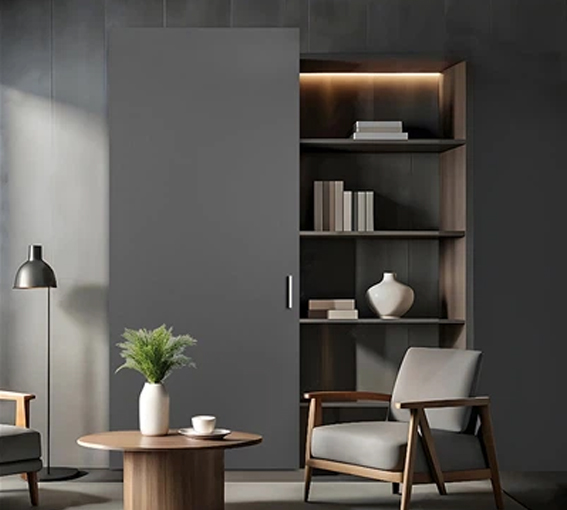
Hidden appearance: Through special design and installation, the door and the surrounding wall are visually integrated, which is not easy to be detected, so as to achieve the invisible effect.
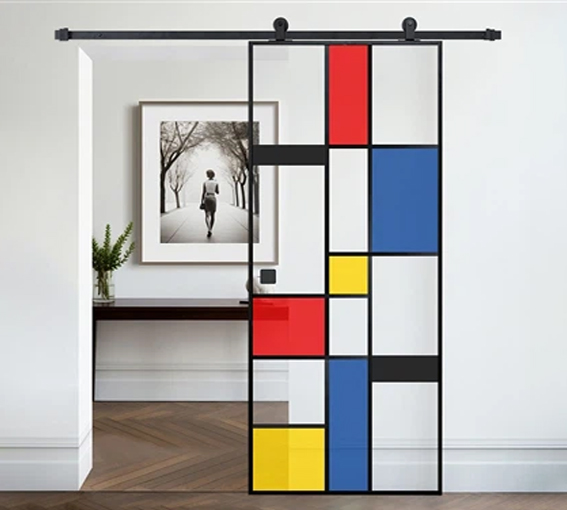
Sliding rail external: The invisible door of the barn door usually adopts the installation method of the top hanging rail, and the slide rail and pulley are exposed, which is a significant feature that is different from the traditional invisible door.
Opening Mode
Push-pull opening: Like ordinary barn doors, the invisible door of the barn door is also switched by pushing and pulling, which is easier to operate.
Application Scenario
Home space: can be used for living room and balcony partition, study, dining room and other areas, can separate the space at the same time, maintain the overall beauty of the space and the sense of openness. It can also be used as a partition between the bedroom and the cloakroom, which can not only meet the functional needs, but also increase the privacy and interest of the space. In addition, it is used to hide unsightly functional Spaces such as storage rooms, equipment rooms or electricity meter boxes, making the overall space more tidy.
Commercial space: In high-end clubs or hotels, it can be used to hide the service area or the entrance of the equipment room, enhancing the luxury and mystery of the overall space. In the exhibition hall or art museum, it is often used to hide the storage area or office area entrance, in order to preserve the integrity of the exhibition space and the artistic atmosphere.
Material Selection
Wood: with a natural, warm texture, can add a simple and warm space, suitable for a variety of decoration styles, such as Nordic style, Japanese style, American country style.
Metal: gives a modern, industrial feeling, durable, suitable for the pursuit of personality and fashion sense of space, such as modern simple wind, industrial wind and so on.
Advantage
Space saving: It is fitted to the wall and does not occupy the door space, which is an ideal choice for rooms or areas with small space.
Strong decorative: rich colors, textures, diverse shapes, can be customized according to different decoration styles and personal preferences, improve the appearance level and taste of home or commercial space.
Reusable: Easy to disassemble, if you move or need to change location, you can reinstall it elsewhere, saving costs.
Shortcoming
Poor sound insulation and sealing: Because there is a certain gap between the door and the wall, and there is usually no door cover, the performance is weak in terms of sound insulation and sealing, the privacy is relatively poor, and there may be problems such as odor odor and bad insulation.
There are requirements for the installation of the wall: completely rely on the above track force, so the bearing capacity of the beam on the door has higher requirements, it is best to install on the load-bearing wall or the reinforced structural beam poured by the building itself, hollow brick, light brick, foam brick and other walls may not be able to bear its weight.
Design Feature
Hidden appearance: Through special design and installation, the door and the surrounding wall are visually integrated, which is not easy to be detected, so as to achieve the invisible effect.
Sliding rail external: The invisible door of the barn door usually adopts the installation method of the top hanging rail, and the slide rail and pulley are exposed, which is a significant feature that is different from the traditional invisible door.
Opening Mode
Push-pull opening: Like ordinary barn doors, the invisible door of the barn door is also switched by pushing and pulling, which is easier to operate.
Application Scenario
Home space: can be used for living room and balcony partition, study, dining room and other areas, can separate the space at the same time, maintain the overall beauty of the space and the sense of openness. It can also be used as a partition between the bedroom and the cloakroom, which can not only meet the functional needs, but also increase the privacy and interest of the space. In addition, it is used to hide unsightly functional Spaces such as storage rooms, equipment rooms or electricity meter boxes, making the overall space more tidy.
Commercial space: In high-end clubs or hotels, it can be used to hide the service area or the entrance of the equipment room, enhancing the luxury and mystery of the overall space. In the exhibition hall or art museum, it is often used to hide the storage area or office area entrance, in order to preserve the integrity of the exhibition space and the artistic atmosphere.
Material Selection
Wood: with a natural, warm texture, can add a simple and warm space, suitable for a variety of decoration styles, such as Nordic style, Japanese style, American country style.
Metal: gives a modern, industrial feeling, durable, suitable for the pursuit of personality and fashion sense of space, such as modern simple wind, industrial wind and so on.
Advantage
Space saving: It is fitted to the wall and does not occupy the door space, which is an ideal choice for rooms or areas with small space.
Strong decorative: rich colors, textures, diverse shapes, can be customized according to different decoration styles and personal preferences, improve the appearance level and taste of home or commercial space.
Reusable: Easy to disassemble, if you move or need to change location, you can reinstall it elsewhere, saving costs.
Shortcoming
Poor sound insulation and sealing: Because there is a certain gap between the door and the wall, and there is usually no door cover, the performance is weak in terms of sound insulation and sealing, the privacy is relatively poor, and there may be problems such as odor odor and bad insulation.
There are requirements for the installation of the wall: completely rely on the above track force, so the bearing capacity of the beam on the door has higher requirements, it is best to install on the load-bearing wall or the reinforced structural beam poured by the building itself, hollow brick, light brick, foam brick and other walls may not be able to bear its weight.
27
DECEMBER
Detailed Installation Steps For Glass Barn Doors
Preparation Before Installation
Tools and materials: Tools such as screwdrivers, wrenches, electric drills, electric hammers, levels, measuring tape, pencils, glass suction cups, and accessories such as expansion screws, washers, pulleys, swing stoppers, and anti-jump washers must be prepared.
Door cleaning and measurement: clean the debris and dust in the door to ensure that the door is clean and tidy. Use a tape measure to accurately measure the width and height of the door, and determine the installation position of the barn door according to the opening direction of the door and the use of habits, and mark the door with chalk or marker.
Choose the right glass barn door: according to the size of the door and personal preferences, choose the right size and style of glass barn door, while checking the quality of the door and accessories are complete.
Mounting Track
Determine the track position: According to the height of the door and the height of the door, use a level to determine the installation position of the track on the wall, and use a pencil to make a mark. The height of the general track should make the bottom of the door and the ground have an appropriate spacing, usually about 1-2 cm, to ensure that the door can be opened and closed smoothly.
Drilling installation: in the marked position, use an electric drill to drill the hole, the hole depth should be moderate, generally about 7 cm, and then put the expansion tube into the hole.
Fix the track: Align the track with the expansion tube, pass the screw through the rail and the gasket, fix the track firmly on the wall, pay attention to tighten the screw to ensure that the track is firmly installed, and use a level to check whether the track is level again, if not, adjust it in time.
Mounting Door Panel
Install the pulley: Lay the glass barn door flat on the ground, drill holes at the top of the door according to the installation position of the pulley, and then fix the pulley to the door with screws.
Hanging door panel: lift the door panel installed with the pulley, align it with the track, hang the pulley on the track, and then gently push the door panel to check whether the door can slide smoothly on the track, if there is a blockage or not smooth, you need to check whether the pulley is installed correctly or whether there is debris in the track.
Adjust Door Seams and Install Fittings
Adjust the door gap: After the door is installed, it is necessary to adjust the size of the door gap, so that the gap between the door and the door is uniform, and the width of the general door gap is about 3-5 mm. The door gap can be adjusted by adjusting the position of the pulley or by adding a gasket between the door and the track.
Install a swing stop: Install a swing stop on one side of the door to prevent the door from swinging too much during the closing process, affecting the use and safety. Use a screwdriver to fix the swing stop on the wall, and adjust the position of the swing stop so that it is closely attached to the door, but not too tight, so as not to affect the normal sliding of the door.
Install anti-jump washers: Install anti-jump washers on the top edge of the barn door and secure them securely using a screwdriver to prevent the door from derailing during sliding.
Check the Installation Effect
Check the door switch: repeatedly switch the glass barn door, check whether the opening and closing of the door is smooth, there is no deadlock, abnormal noise or excessive resistance, if there is a problem, it is necessary to find the cause in time and adjust.
Check the sealing performance: although the sealing of the barn door is relatively poor, it is still necessary to check whether the gap between the door and the door hole and the track is too large, if necessary, you can use sealing rubber strips and other materials for appropriate sealing treatment to improve the sealing and insulation performance of the door.
Check the installation of accessories: Check whether the swing stop, pulley, anti-jump washer and other accessories are firmly installed, whether there is loose or missing, to ensure that all accessories are installed in place and can work normally.
Tools and materials: Tools such as screwdrivers, wrenches, electric drills, electric hammers, levels, measuring tape, pencils, glass suction cups, and accessories such as expansion screws, washers, pulleys, swing stoppers, and anti-jump washers must be prepared.
Door cleaning and measurement: clean the debris and dust in the door to ensure that the door is clean and tidy. Use a tape measure to accurately measure the width and height of the door, and determine the installation position of the barn door according to the opening direction of the door and the use of habits, and mark the door with chalk or marker.
Choose the right glass barn door: according to the size of the door and personal preferences, choose the right size and style of glass barn door, while checking the quality of the door and accessories are complete.
Mounting Track
Determine the track position: According to the height of the door and the height of the door, use a level to determine the installation position of the track on the wall, and use a pencil to make a mark. The height of the general track should make the bottom of the door and the ground have an appropriate spacing, usually about 1-2 cm, to ensure that the door can be opened and closed smoothly.
Drilling installation: in the marked position, use an electric drill to drill the hole, the hole depth should be moderate, generally about 7 cm, and then put the expansion tube into the hole.
Fix the track: Align the track with the expansion tube, pass the screw through the rail and the gasket, fix the track firmly on the wall, pay attention to tighten the screw to ensure that the track is firmly installed, and use a level to check whether the track is level again, if not, adjust it in time.
Mounting Door Panel
Install the pulley: Lay the glass barn door flat on the ground, drill holes at the top of the door according to the installation position of the pulley, and then fix the pulley to the door with screws.
Hanging door panel: lift the door panel installed with the pulley, align it with the track, hang the pulley on the track, and then gently push the door panel to check whether the door can slide smoothly on the track, if there is a blockage or not smooth, you need to check whether the pulley is installed correctly or whether there is debris in the track.
Adjust Door Seams and Install Fittings
Adjust the door gap: After the door is installed, it is necessary to adjust the size of the door gap, so that the gap between the door and the door is uniform, and the width of the general door gap is about 3-5 mm. The door gap can be adjusted by adjusting the position of the pulley or by adding a gasket between the door and the track.
Install a swing stop: Install a swing stop on one side of the door to prevent the door from swinging too much during the closing process, affecting the use and safety. Use a screwdriver to fix the swing stop on the wall, and adjust the position of the swing stop so that it is closely attached to the door, but not too tight, so as not to affect the normal sliding of the door.
Install anti-jump washers: Install anti-jump washers on the top edge of the barn door and secure them securely using a screwdriver to prevent the door from derailing during sliding.
Check the Installation Effect
Check the door switch: repeatedly switch the glass barn door, check whether the opening and closing of the door is smooth, there is no deadlock, abnormal noise or excessive resistance, if there is a problem, it is necessary to find the cause in time and adjust.
Check the sealing performance: although the sealing of the barn door is relatively poor, it is still necessary to check whether the gap between the door and the door hole and the track is too large, if necessary, you can use sealing rubber strips and other materials for appropriate sealing treatment to improve the sealing and insulation performance of the door.
Check the installation of accessories: Check whether the swing stop, pulley, anti-jump washer and other accessories are firmly installed, whether there is loose or missing, to ensure that all accessories are installed in place and can work normally.
20
DECEMBER
Advantages Of Pocket Doors
Pocket doors, as an innovative door design, are increasingly favored by more and more families due to their unique concealment and multifunctionality. Here are some of the main advantages of pocket doors:
1.Save space
One of the biggest advantages of pocket doors is their ability to save space. Compared to traditional swing or sliding doors, pocket doors can be completely hidden inside the door frame or wall when closed, without taking up additional space. This makes it particularly suitable for rooms with limited space, such as kitchens, bathrooms, and small bedrooms.
2.Improve aesthetics
Due to the fact that the pocket door can be completely hidden when closed, it can maintain the overall beauty and cleanliness of the room. This design not only increases the visual openness of the room, but also better integrates with other interior decoration elements, enhancing the overall aesthetic effect.
3.Increase spatial flexibility
Pocket doors provide greater spatial flexibility. Users can open or close the pocket door at any time as needed to change the layout and functionality of the room. For example, when not needed, the pocket door can be fully retracted, restoring an open sense of space; And when needed, it can quickly shut down, providing necessary privacy and separation.
4.Implement multifunctional partitioning
Pocket doors can play an important role in different life scenarios. For example, installing a pocket door between the kitchen and living room can maintain the privacy of the kitchen during cooking, while opening it when not needed, making the space more spacious. Similarly, pocket doors can also be used between the study and bedroom, providing a dual function of learning and resting.
5.Sound insulation and thermal insulation effect
Although the pocket door can be completely hidden when opened, it still provides good sound insulation and thermal insulation when closed. This makes pocket doors particularly useful in rooms that require quietness or temperature control, such as bedrooms and bathrooms.
In summary, pocket doors are gradually becoming a popular choice in modern home design due to their advantages of saving space, improving aesthetics, increasing spatial flexibility, achieving multifunctional zoning, and providing good sound insulation and thermal insulation effects.
1.Save space
One of the biggest advantages of pocket doors is their ability to save space. Compared to traditional swing or sliding doors, pocket doors can be completely hidden inside the door frame or wall when closed, without taking up additional space. This makes it particularly suitable for rooms with limited space, such as kitchens, bathrooms, and small bedrooms.
2.Improve aesthetics
Due to the fact that the pocket door can be completely hidden when closed, it can maintain the overall beauty and cleanliness of the room. This design not only increases the visual openness of the room, but also better integrates with other interior decoration elements, enhancing the overall aesthetic effect.
3.Increase spatial flexibility
Pocket doors provide greater spatial flexibility. Users can open or close the pocket door at any time as needed to change the layout and functionality of the room. For example, when not needed, the pocket door can be fully retracted, restoring an open sense of space; And when needed, it can quickly shut down, providing necessary privacy and separation.
4.Implement multifunctional partitioning
Pocket doors can play an important role in different life scenarios. For example, installing a pocket door between the kitchen and living room can maintain the privacy of the kitchen during cooking, while opening it when not needed, making the space more spacious. Similarly, pocket doors can also be used between the study and bedroom, providing a dual function of learning and resting.
5.Sound insulation and thermal insulation effect
Although the pocket door can be completely hidden when opened, it still provides good sound insulation and thermal insulation when closed. This makes pocket doors particularly useful in rooms that require quietness or temperature control, such as bedrooms and bathrooms.
In summary, pocket doors are gradually becoming a popular choice in modern home design due to their advantages of saving space, improving aesthetics, increasing spatial flexibility, achieving multifunctional zoning, and providing good sound insulation and thermal insulation effects.